Fixing Existing Sidewalks
Concrete Sidewalk Repair in Burlington NC
Cracks, chipped edges, worn surfaces, and uneven sections can make a sidewalk harder to use. We look at the damage and its likely cause, then explain whether repair makes sense.
Request a Sidewalk Evaluation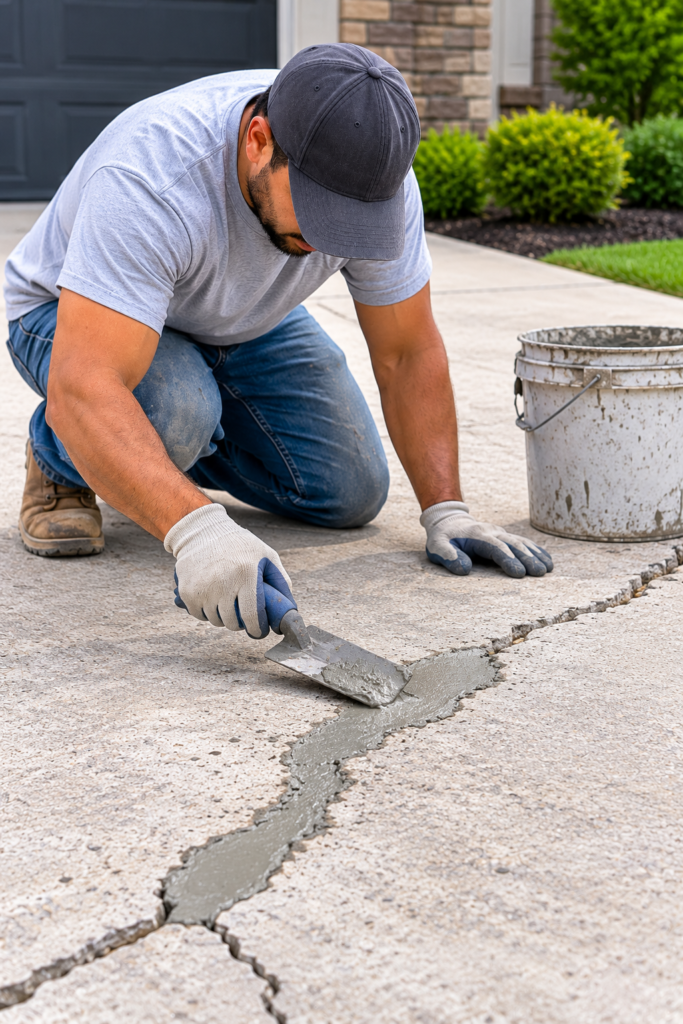
Start With the Damage
What Sidewalk Damage Can Tell You
Concrete Sidewalk Repair starts with the problem you can see. Some damage is limited to the surface or one small area. Shifted or sunken sections may point to a larger issue below.
The visible symptom alone does not decide the right fix. Two cracks can look alike but have different causes.
Ask any concrete contractors in Burlington what is causing the damage, not just how to cover it.
What We See
Common Concrete Sidewalk Problems
Cracks
Some cracks are thin and stable. Others widen or create a height difference.
Spalling or Scaling
The top surface flakes or peels, often linked to moisture and freeze-thaw cycles.
Chipped Edges
Edges can break where they lack support or take repeated impacts.
Uneven Sections
One slab may sit higher than the next, leaving a lip that can catch a foot.
Settled Areas
Part of a sidewalk may sink where the ground has compacted or washed out.
Surface Deterioration
Worn or crumbling areas develop with weather and heavy foot traffic.
Finding the Cause
What May Be Causing the Sidewalk Damage?
Sidewalk damage often has more than one cause. Common factors include:
- Water and drainage. Water beside or under the sidewalk can soften the ground.
- Ground movement. Soil that shifts or washes out can leave sections unsupported.
- Subgrade conditions. Weak ground can lead to cracking and sinking.
- Weather exposure. Freeze-thaw cycles add stress where water gets in.
- Adjoining surfaces. Driveways, steps, and curbs can move differently.
- Tree roots. Nearby roots can lift or crack sections.
Age and wear play a part too. Knowing the cause shows whether a repair is likely to last.
Evaluation First
What Is Checked Before Repairing a Concrete Sidewalk?
01
Type of Damage
Different problems, from thin cracks to settled slabs, need different approaches.
02
Extent of Damage
Is the damage limited to one spot, or does it run along much of the sidewalk?
03
Surface Movement
Height differences between sections may point to movement below.
04
Drainage and Water
Where water collects or flows can show what is affecting the sidewalk.
05
Surrounding Conditions
Roots, nearby surfaces, and grading all play a part.
06
Repair vs. Replacement
Together, these checks help decide whether repair or more extensive work fits.
Uneven and Settled Sections
When Sidewalk Sections Shift
Uneven or settled sections can come from settlement, subgrade conditions, drainage problems, roots, or movement of adjoining surfaces. Each may call for a different solution.
Height differences and broken edges can create trip concerns. Repair can reduce them, but no repair makes a walking surface risk-free.
Options may include repairing or replacing a section. Concrete leveling may suit certain sunken slabs, but not every situation.
Repair or More?
Sidewalk Repair or More Extensive Work?
When Repair May Fit
Localized damage in otherwise sound, stable concrete may suit repair.
When More Work May Be Needed
Widespread damage or significant movement may call for replacing sections.
No Universal Rule
A crack does not automatically mean replacement, and small damage is not automatically repairable.
Section by Section
Often only damaged sections need attention.
Water and Drainage
How Water Affects a Sidewalk
Water around a sidewalk can affect the soil underneath and the walking surface. Runoff from roofs, yards, and driveways may flow across or beside it.
Low areas hold standing water, and downspouts or landscaping that send water toward the sidewalk keep the ground soft.
If water is part of the problem, it may need attention too. Repairing the concrete alone does not fix drainage.
Repair Options
Common Sidewalk Repair Approaches
Cracks and Minor Damage
Some cracks can be cleaned and filled or sealed to limit water getting in, and chipped edges or small damaged areas can sometimes be repaired. Not every crack needs filling, and cracks can return if movement continues.
Surfaces and Damaged Sections
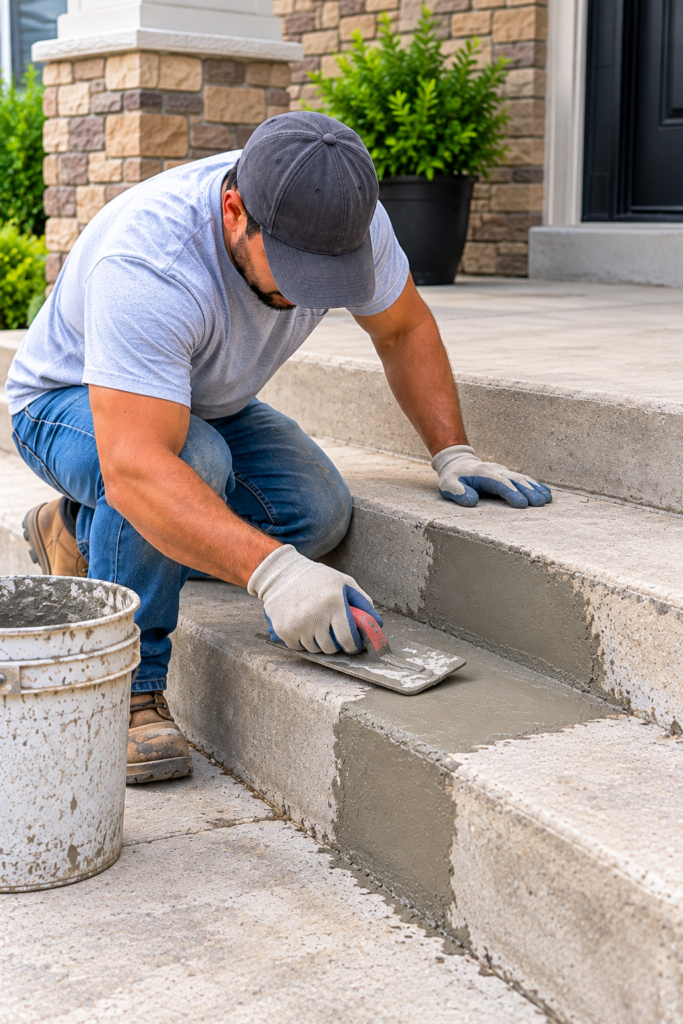
Surface repair can work when the concrete below is sound, but not on concrete that is cracked through or unstable.
A section too damaged for a reasonable repair may be better removed and replaced.
Local Considerations
Concrete Sidewalk Repair in Burlington, North Carolina
Not every sidewalk in Burlington is handled the same way. Within city limits, the City of Burlington’s Street Division maintains sidewalks and curbs, except on privately maintained streets. You can report a public sidewalk problem through the city’s Fix it, Burlington! service.
A sidewalk entirely on private property is a different situation. Work in the public right-of-way requires an excavation permit from the city, and sidewalks along state-maintained roads may involve NCDOT.
Clay-rich Piedmont soils and freezing winter nights can both add to cracking and settling here.
Planning Your Repair
What Affects a Sidewalk Repair Project
Repair scope and cost depend on the sidewalk. Common factors include:
Type of damage
Extent of damage
Number and size of affected areas
Site access
Movement or settlement
Drainage issues
Removal needs
Repair or replacement approach
Public-area requirements, if any
There is no single price per section. Planning a brand-new route instead? See our concrete sidewalk page.
Have a Damaged Concrete Sidewalk?
Tell us what damage you see, where it is, how much of the sidewalk is affected, and whether sections are uneven or holding water.
FAQ
Sidewalk Repair Questions
Can cracks in a concrete sidewalk be repaired?
Many can, depending on their cause, whether they are still moving, and the condition of the concrete around them. Some cracks do not need repair at all.
What causes concrete sidewalks to become uneven?
Common causes include settling soil, drainage problems, tree roots, and movement of nearby surfaces. The cause should be checked before choosing a fix.
Can a damaged sidewalk section be repaired without replacing the whole sidewalk?
Often, yes, when the rest of the sidewalk is in good shape.
When should a sidewalk be repaired instead of replaced?
Repair may make sense when damage is localized and the remaining concrete is sound. Widespread damage or significant movement may call for replacing sections.
Can drainage problems contribute to sidewalk damage?
Yes. Water collecting beside or under a sidewalk can soften the ground and add to cracking, settling, and surface wear.
Who is responsible for sidewalk repairs in Burlington?
It depends on where the sidewalk is. The City of Burlington maintains sidewalks within city limits except on privately maintained streets. Sidewalks on private property are different, so check with the city if unsure.
Does sidewalk repair require a permit in Burlington?
It depends on location and scope. Work in the city’s public right-of-way requires an excavation permit, while repairs entirely on private property may not involve the city.